
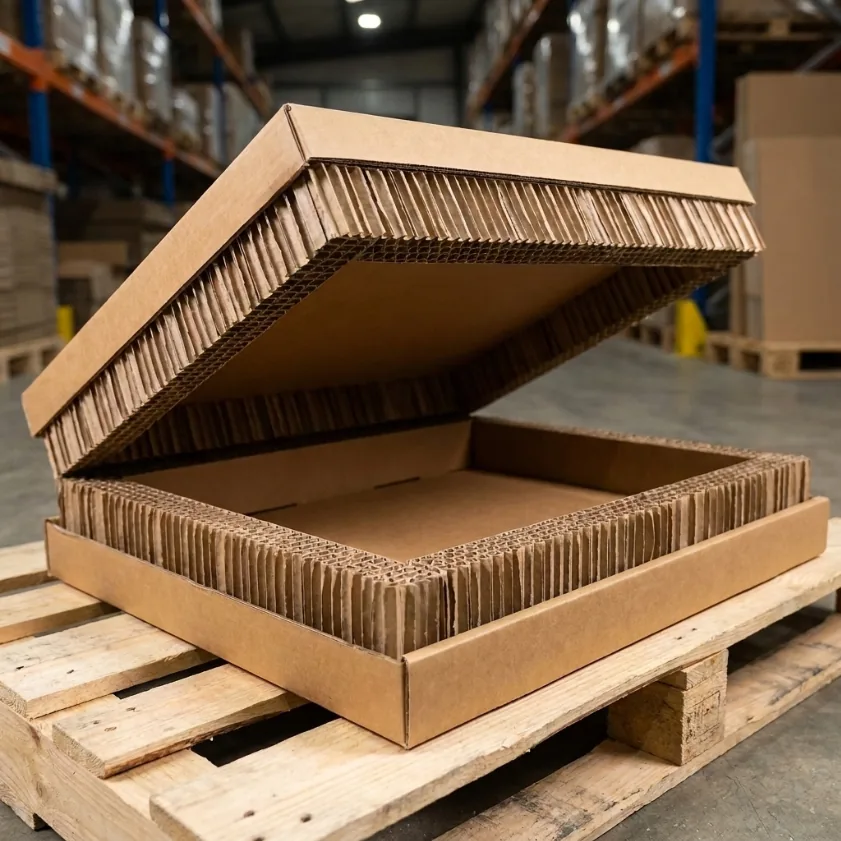
International buyers get better outcomes when the product, supplier, packing and route are treated as one operating decision. This field note explains the facts to collect, the choices to make and the evidence to keep before cargo is released. It is written for practical planning; exact requirements still depend on the product, destination, carrier and current regulations.
Mirrors combine fragile faces, vulnerable edges and a large amount of non-selling air when the pack is too deep.
Start with the decision, not the freight rate
A workable plan begins by defining what must be true at delivery: accepted product, protected condition, usable documents and a handover the consignee can actually receive. A low rate cannot compensate for an unready supplier, an unstable pack or missing evidence. Conversely, the most protective or fastest option is not automatically the best if it creates avoidable cube, cost or handling.
Ask the supplier for measured facts rather than reassurance. Where a point is uncertain, use a sample, pilot, inspection or carrier acceptance step to reduce that uncertainty before the full order is committed.
Facts the buyer should confirm
- Mirror dimensions, thickness and tempering status.
- Edge and corner exposure after retail-pack assembly.
- Carton or crate outside dimensions and stack direction.
- Container loading pattern and usable cube.
- Damage evidence by failure location, not only a total percentage.
A practical sequence
- Step 1. Separate glass strength from packaging strength.
- Step 2. Compare a low-profile reinforced pack with a conventional crate.
- Step 3. Use honeycomb paper or foam with engineered corner protection.
- Step 4. Run a monitored pilot before changing the full order.
- Step 5. Record loading photos and arrival inspection results.
Evidence worth keeping
A documented improvement sequence supplied by the buyer moved from an early damage baseline of roughly 30% to about 8% after standard improvements, followed by zero reported breakage in the monitored pilot shipments after the redesigned pack. This is evidence from a defined sequence, not a guarantee for future shipments.
Evidence should be tied to the purchase order, revision, batch or serial range. General factory photographs are useful context, but they do not replace product-specific measurements, tests and release records.
Trade-offs to make visible
Compare total landed outcome rather than one line item. Include packaging cost, chargeable weight or container cube, expected handling, inventory timing, rework exposure and the cost of a failed delivery. When claims depend on a pilot or a past shipment, state the sample size and conditions. No packaging or supplier process can honestly guarantee every future result.
Questions to send with your enquiry
- Can you provide mirror dimensions, thickness and tempering status?
- Can you provide edge and corner exposure after retail-pack assembly?
- Can you provide carton or crate outside dimensions and stack direction?
- Can you provide container loading pattern and usable cube?
- What destination, deadline and final-delivery constraints should the plan include?
Decision summary
What to verify before acting on “Mirror export freight is high and breakage is painful: redesign the pack before the route”
| Decision | Evidence to request | What the answer changes |
|---|---|---|
| Can the cargo and supplier meet the plan? | Product specification, packed dimensions, weight, value, supplier location and readiness date. | Feasible modes, pickup plan and quotation scope. |
| Where can loss, delay or rejection occur? | Packing photos, declarations, test documents, labels, access limits and handling points. | Carrier acceptance, insurance, packaging and delivery controls. |
| Who owns each handoff? | Named supplier, warehouse, forwarder, customs and consignee responsibilities. | Milestones, evidence capture and exception response. |
Buyer questions
Questions buyers ask before redesigning mirror export packing
Short answers to the questions that usually remain after the first review. Final requirements still depend on the actual cargo, supplier, carrier and destination.
How do I know whether freight cost is caused by the route or the pack?
Measure the finished pack, calculate container or chargeable-weight utilization, and identify unused void, excessive framing and handling constraints before comparing routes.
What should a mirror packaging pilot prove?
The pilot should show edge and face restraint, stack or compression behavior, loading orientation, handling access, outside cube and arrival condition under documented conditions.
Can a successful pilot guarantee every mirror will arrive undamaged?
No. It provides evidence for a defined product, pack and handling method. Production consistency, loading, route and final delivery still require controls and exception records.