
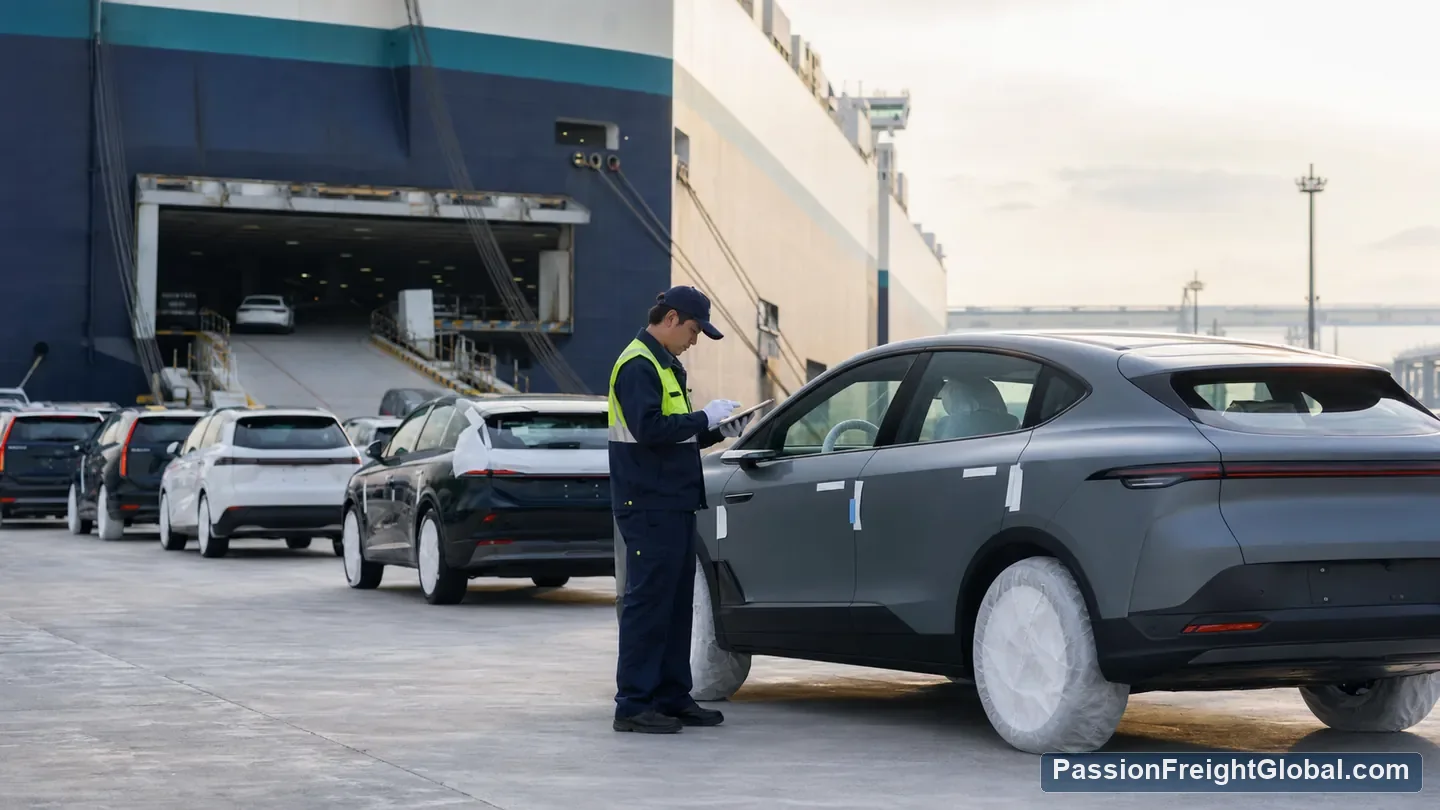
A vehicle can be ready at the factory and still be unready for export or registration at destination. Export licensing, vehicle identity, condition, battery or fuel status, carrier rules and destination homologation need one coordinated release file.
What to verify before asking for a firm booking
| Decision | Evidence to request | What it changes |
|---|---|---|
| Can the exporter ship this vehicle? | Vehicle type, new or used status, manufacturer/trader eligibility and the current China export-licence requirement. | Whether the exporter and transaction are legally workable. |
| Can it enter and be used at destination? | VIN/model, conformity or homologation evidence, age, steering side, emissions/safety requirements and importer approval. | Import clearance, registration and commercial value. |
| RoRo or container? | Quantity, vehicle dimensions, operability, value, route, port handling, personal items and security requirements. | Mode, handling points, transit and total cost. |
| What condition is handed over? | VIN-level photos, odometer, accessories, keys, exterior/interior condition, battery state or fuel limits and alarm instructions. | Carrier acceptance, custody evidence and claim review. |
A practical China-export sequence
- Verify exporter eligibility and the current licence process for the exact vehicle and trade mode.
- Ask the importer to confirm destination conformity, registration, tax and documentary requirements by VIN/model.
- Obtain the carrier's current EV battery state, fuel, alarm, operability and dangerous-goods instructions before terminal delivery.
- Create a VIN-level condition report covering every side, glass, wheels, cabin, odometer, accessories and existing marks.
- Define key custody, terminal handoff, prohibited loose items, destination collection deadline and damage-notice process.
The mistake that creates the most avoidable risk
Do not assume that a model sold in one country can be registered in another, or that every RoRo operator accepts EVs under identical conditions. Confirm both destination approval and the named carrier's current rules.
Official references to check before booking
Rules and operator policies change. These links are starting points; confirm the latest requirement with the exporter, competent authorities and the named carrier for the actual shipment.
- China MOFCOM — 2026 vehicle and motorcycle export-licence application notice
- China MOFCOM — 2026 export-licence catalogue
- IMO — International Maritime Dangerous Goods Code
Buyer questions
Questions buyers ask after the first vehicles & ev export review
Short answers for the doubts that remain after a first quotation. Final acceptance still depends on the actual product, shipper, carrier, route and destination.
Do pure electric passenger vehicles need a China export licence in 2026?
China's 2026 arrangements include export-licence management for pure electric passenger vehicles. Confirm the exact product code, exporter eligibility and current procedure before contracting the shipment.
Is RoRo always cheaper than a container?
Not always. Quantity, route, port charges, vehicle value, operability, security, inland legs and destination handling determine the total comparison.
Can personal goods be left inside an exported vehicle?
Do not assume so. RoRo terminals and carriers commonly restrict loose contents. Obtain written acceptance and declare any permitted items before delivery.
What evidence protects a vehicle-damage claim?
Use a VIN-linked condition record at origin, clear custody points, terminal reports, prompt destination inspection and notice within the policy or carrier deadline.