
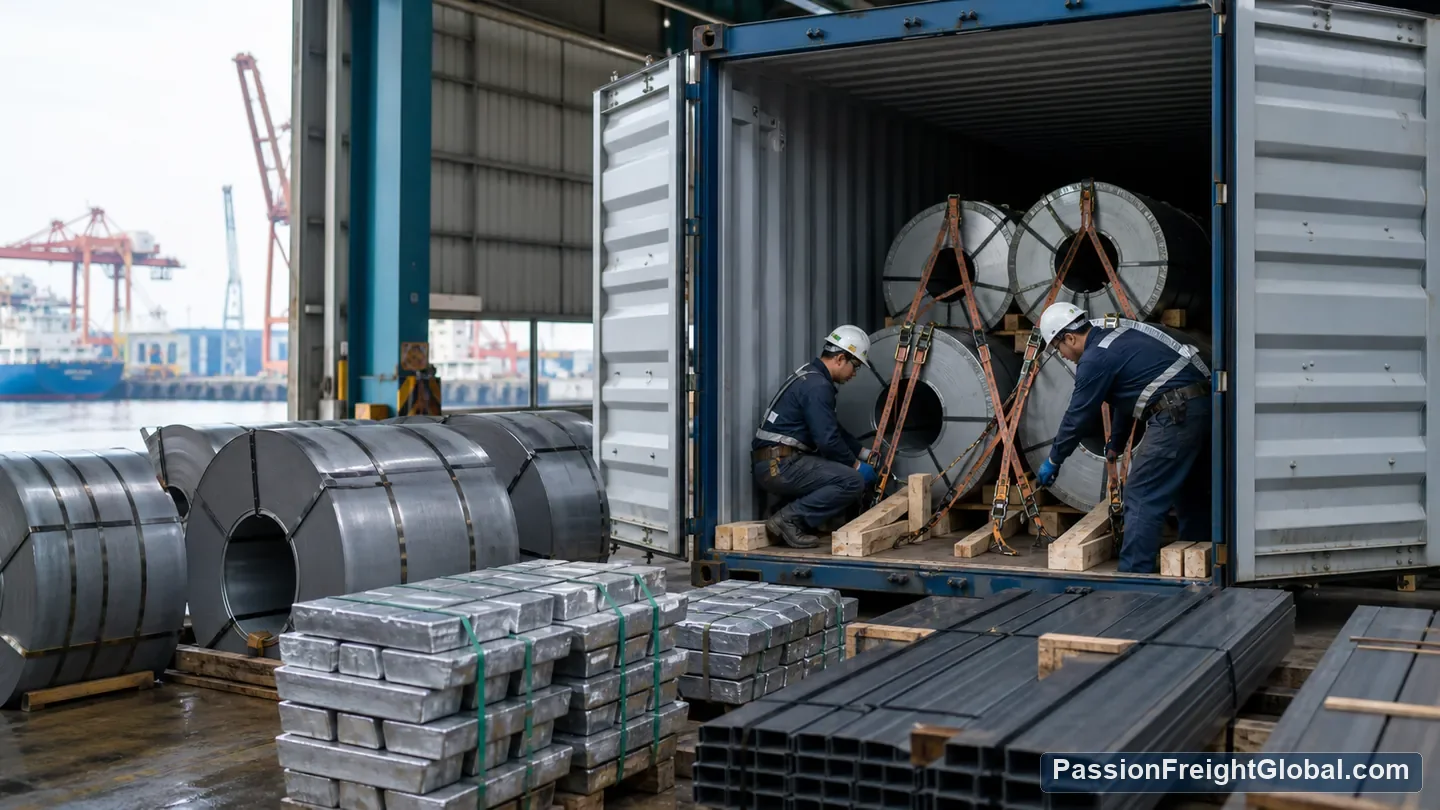
A steel coil can fit inside a container and still be an unsafe or rejected load. Dense cargo concentrates weight, can roll, breaks weak floors and changes inland trucking, terminal and equipment choices long before the vessel is selected.
What to verify before asking for a firm booking
| Decision | Evidence to request | What it changes |
|---|---|---|
| What is each unit? | Measured unit and total weight, dimensions, support footprint, centre of gravity, lifting points and surface protection. | Equipment, handling and quotation basis. |
| Can the equipment carry the load? | Container plate, floor/loading limits, carrier approval, truck axle plan, crane or forklift capacity. | Container, flat rack, breakbulk or split-load decision. |
| How is movement prevented? | Engineering or approved securing plan, chocks, cradles, rated lashings, blocking and inspection photographs. | Safety, loading time and acceptance. |
| How is condition protected? | Rust-prevention method, wrap, drainage, condensation plan, edge/contact protection and destination storage. | Packaging and claim evidence. |
A practical China-export sequence
- Weigh each dense unit and reconcile the total with the packing list before selecting equipment.
- Map point loads through cradles or dunnage and check container floor, trailer axle and lifting limits.
- Use anti-roll restraint and rated securing designed for the actual coil orientation and journey.
- Record the empty container condition, support arrangement, every securing stage, closed doors and seal.
- Provide the verified gross mass in time for the terminal and vessel stow plan.
The mistake that creates the most avoidable risk
Never copy a lashing plan from a different coil size or container without review. Weight, diameter, eye orientation, friction, support geometry and transport accelerations can change the forces.
Official references to check before booking
Rules and operator policies change. These links are starting points; confirm the latest requirement with the exporter, competent authorities and the named carrier for the actual shipment.
- IMO/ILO/UNECE — CTU Code for packing and securing cargo transport units
- IMO — Verified gross mass of packed containers
- IMO — Safe transport of containers
Buyer questions
Questions buyers ask after the first steel & processed metals review
Short answers for the doubts that remain after a first quotation. Final acceptance still depends on the actual product, shipper, carrier, route and destination.
Why can a container be under payload but still unsafe for steel coils?
Payload does not show point loading, floor strength, axle distribution or roll forces. The support footprint and securing plan must be checked separately.
Who is responsible for verified gross mass?
Under SOLAS, the shipper named in the transport document is responsible for providing VGM, even if another party performs the weighing.
Should coils travel eye-to-sky or eye-to-side?
There is no universal answer. Coil dimensions, cradle design, equipment, handling and the carrier-approved securing method determine the safe orientation.
When should breakbulk be compared with containers?
Compare it when unit dimensions, concentration of weight, crane needs, quantity or container securing make standard equipment impractical or uneconomic.